Sunday, 7 April 2019

Sunday Stitch School - Lesson 94: Smyrna Stitch

While reading Hokkaido Kudasai, where Pamela showcases her fantastic collection of needle keeps, I was reminded of a nice stitch, on her Bee Pin Keep, the Smyrna Stitch.

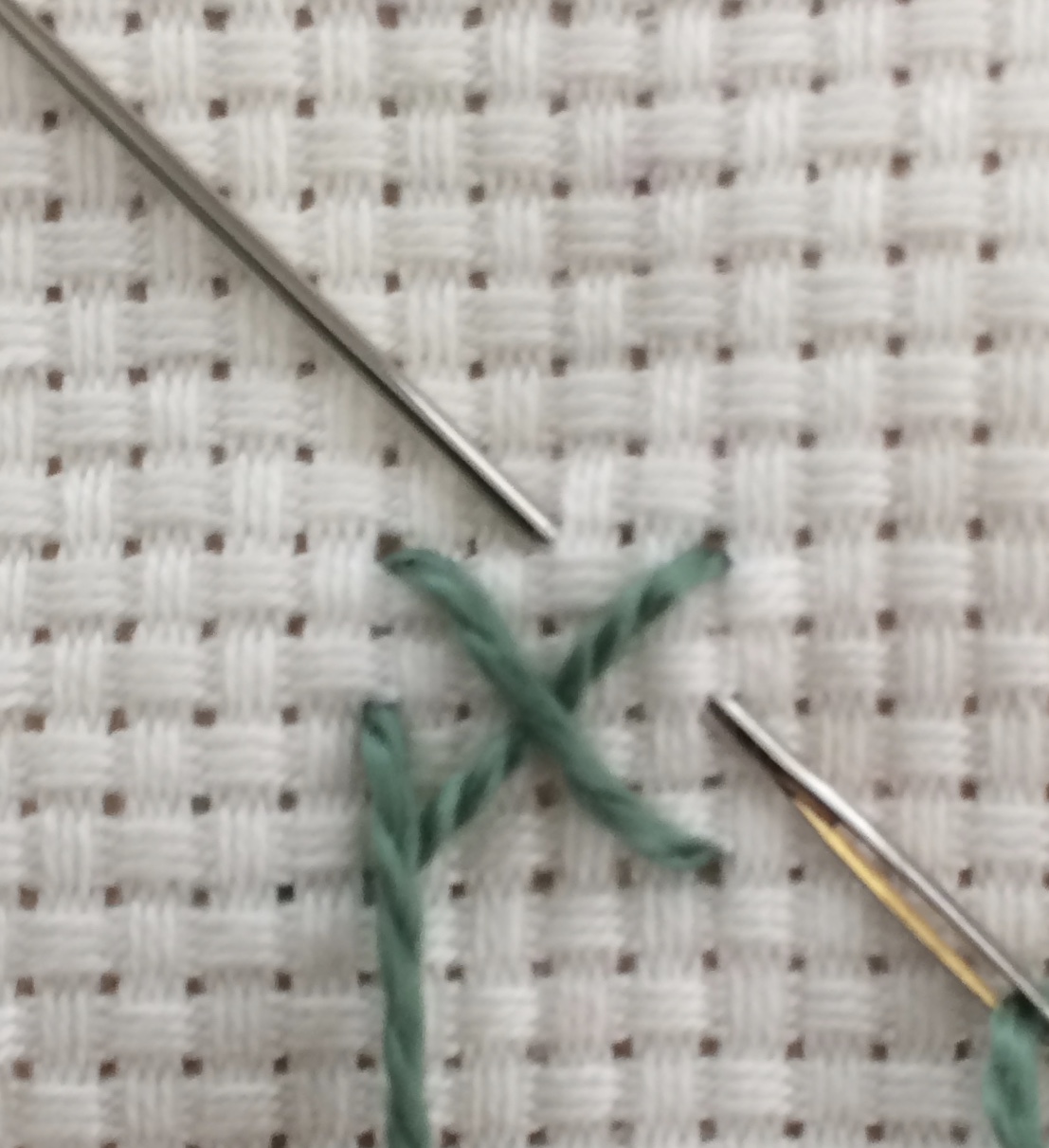
Smyrna Stitch is basically made up of a Cross Stitch staggered with an Upright Cross Stitch. Easy to do, yet stylish. Furthermore, it is a nice filling stitch and is popular in Canvas Work.

It also goes under the names of Leviathan Stitch, Double Cross Stitch (although there is another Canvas stitch with this name) and Railway Stitch.
Updated: In French, according to Mattia, it is also called Smyrna Point.

Work it like this:
Make a Cross Stitch over an odd number of holes, here I used five.

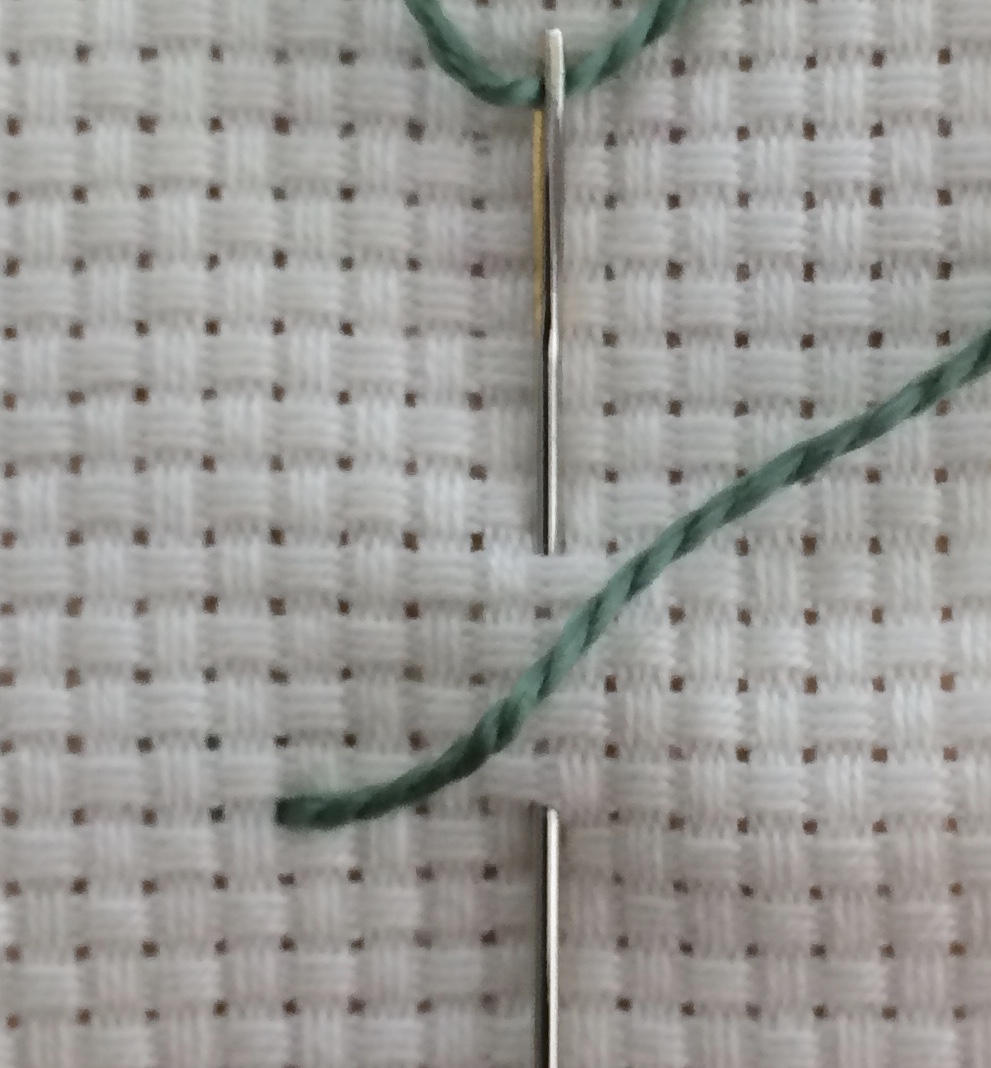
Come out in the middle hole on the left side.

 Go across to the right side, middle hole,
and up to the middle of the top line.

Then down in the bottom centre.

 Easy and compact.

Homework:
Aida Sampler
Sunday Stitch School Reference Chart
Canvas Sampler (it's been a long time since I added something here!)


Sunday Stitch School - Lesson 93: Rya Stitch

Today we will learn a stitch that is used for rug knotting, the Rya Stitch.
In the 1970's there was a rya knotting boom in Sweden.
Here is a YouTube link to show you how the stitch is used for making rugs.

The Rya Stitch can of course be used for embroidery, too.
When worked on canvas it is called either Rya Stitch or Ghiordes Stitch (named after the Turkish town Gördes, a centre for hand knotted carpets).
When worked on plain fabric, and the loops cut open, it is known as Turkey Work.
Updated: Mattia tells me, the French name is Rya Point.

You need fabric to stitch on, thread and needle.
I'd also recommend a very long needle and a hoop.

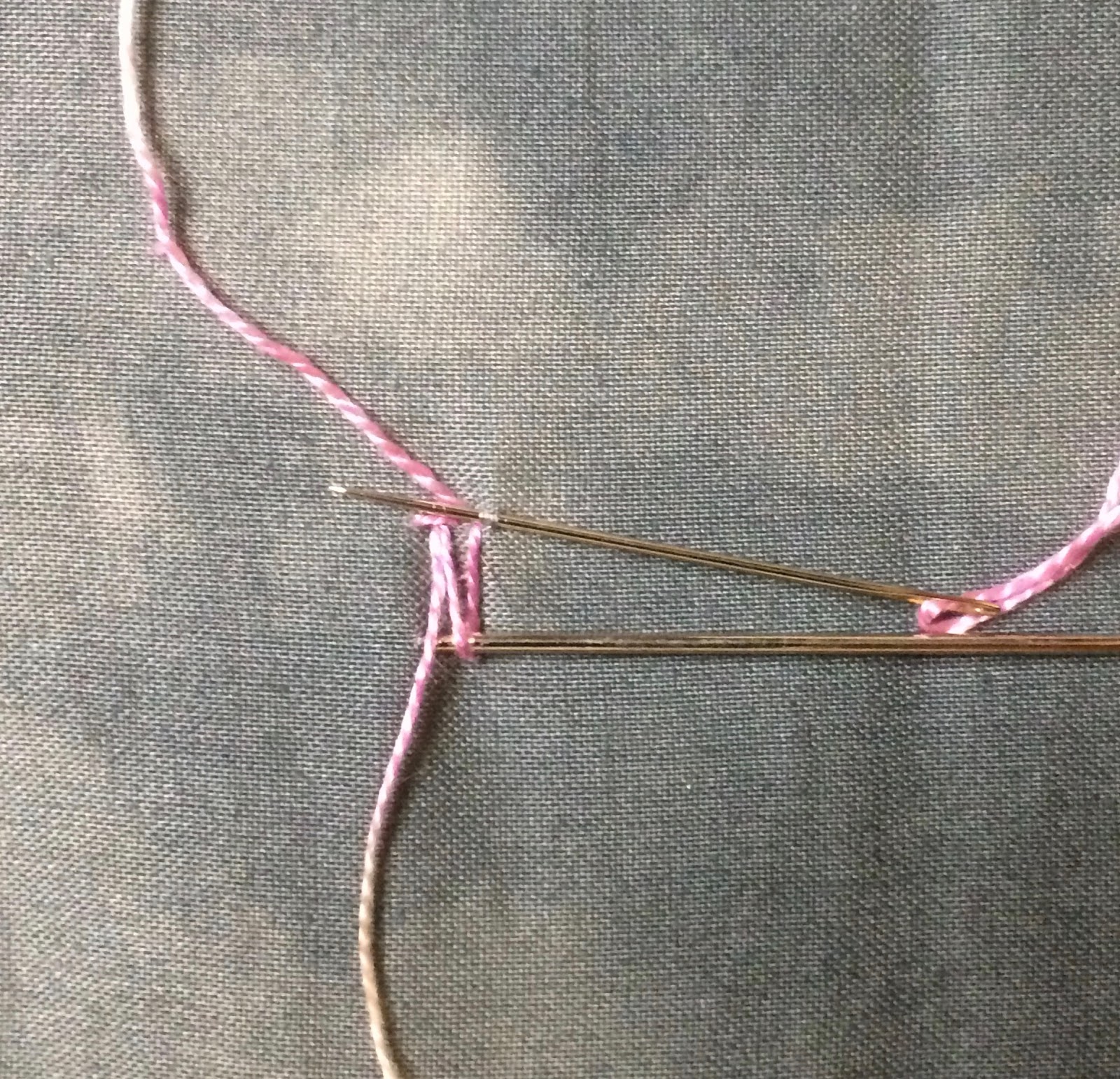
Stretch the fabric in a hoop and insert the long needle from the back, so you have a bar to work the thread over.


Measure the length you want the loops to be.
Insert the needle at this point above the bar, right to left and take a small bite of fabric. Pull through.


Leave a tail down over the bar.
Let the working thread go up above the needle, and take a new stitch next to the first one. 
Pull through.

Let the working thread hang down over the bar.
Can you see the T-shaped stitch?
Next, take the needle under the bar without catching any fabric.


Now take the thread under the bar, and

make a new stitch, right to left.

Pull through, and notice how a loop has formed around the bar.
Keep the working thread above the stitch line. 

Take a new stitch. Pull through.

Once again, take the needle under the bar to make a loop.
Make sure you don't catch any fabric.

Continue making stitches in this way until you have the required number of loops.

Remove the long needle. Either keep the loops or cut them open.

Homework:
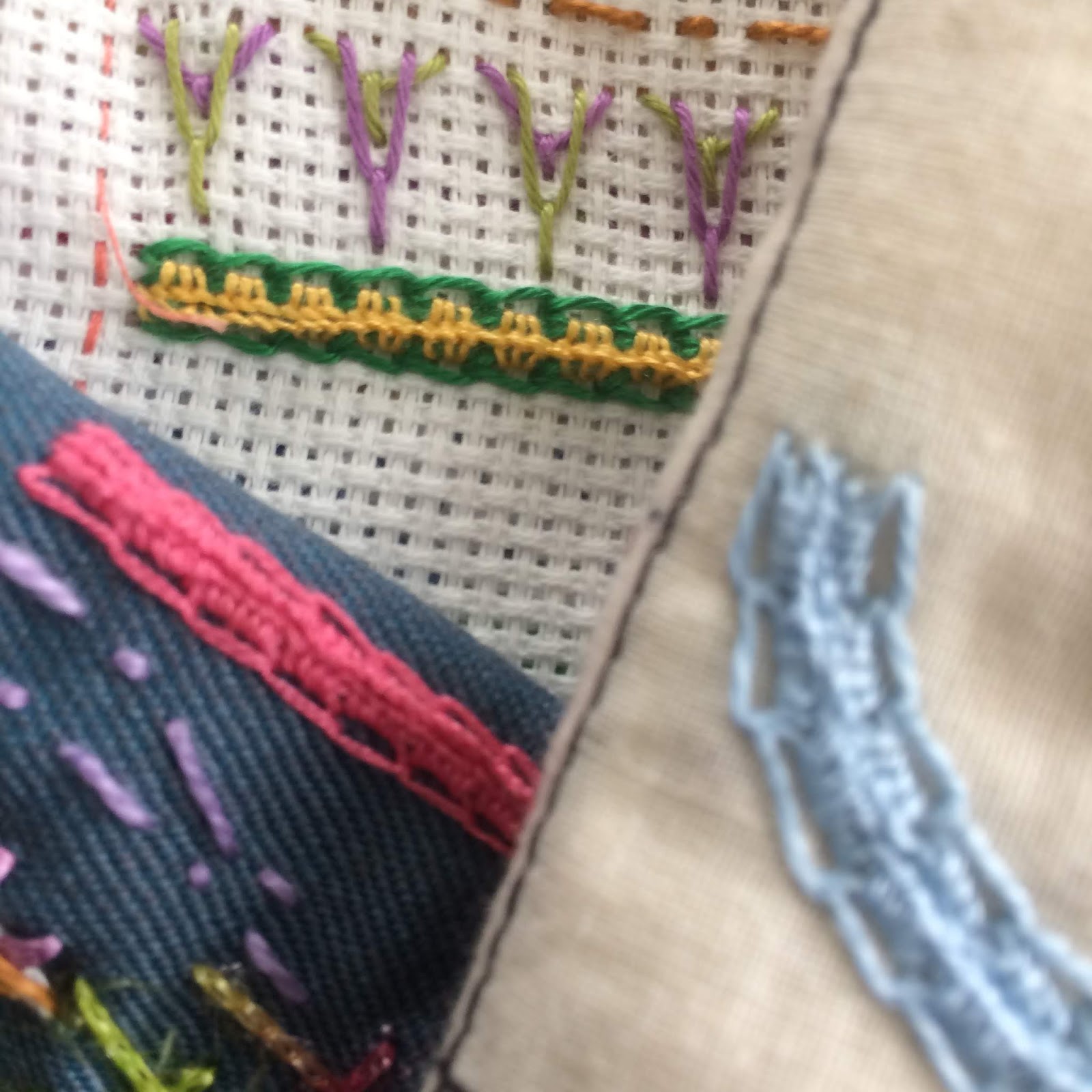
Aida Sampler, SSS Reference Chart, Teal Wool Tailoring Scribble Cloth
Friday, 5 April 2019

Friday Homework for Lesson 93: Rya Stitch

The Rya Stitch is an interesting one!

I had a look in my Swedish textile encyclopedia
and learned that the English word 'rug' is of Scandinavian origin (Norwegian 'rugga' = coarse coverlet.)
As you know a 'rug' can be a floor covering, a carpet, but also a small blanket, e.g. a travel rug.

According to the encyclopedia, it was the Vikings who after encountering oriental carpets when they went raiding and trading in the Middle East and Central Asia, brought back the idea of pile weaving.

They began to add small tufts of wool when weaving, and thereby made the first Scandinavian rya rugs. These were not used for sitting on, but for bedding, with the nape facing the body.

The Rya rugs were also indispensable on the Viking longships on the voyages to North Africa, Russia and Vinland (Coastal North America, where Leif Erikson first landed in circa 1000). The ultimate travel rug!

For the Vikings one of the most valuable items for trade was fur. Fur and wool was important to combat the cold of frosty Northern Europe, and therefore 'common' at home in Scandinavia. Maybe so common that having a rya rug was highly fashionable. The origin of 'fake fur'?

Later on, rya rugs were stitched with yarn instead of woven. The name remained though - rya rug.

So now for my homework:
Aida sampler

Sunday Stitch School Reference Chart


Teal Wool Tailoring Scribble Cloth


Wednesday, 3 April 2019

WIPW - A Good Week

I am happy to say I have several things to report for Work In Progress Wednesday.

Crazy for Crazy
I have added a few details, in stitches, beads and a sequin, and now consider this block finished.


I have already selected the fabric for the next block. All pink! Stitching and embellishment details will be in white.

BES
On my Brazilian Embroidery Study I have worked a flower.
In the middle is a Whipped Wheel made with variegated thread that created the beautiful change from pink to green.
The outer petals are made with long legged Fly Stitch and tipped with Bullion Knot. 
The results is not that good - I still consider Bullion Knot to be one of the most difficult stitches.


Vaxholmskudden
Most of my time has been spent on the wool embroidery on this cushion.
The circle of polka dot cotton has been edged with Back Stitched Chain Stitch.
Inside these semicircles I added Half Buttonhole Wheel (orange), and added Detached Chain Stitch inside the segments (pink).
Then there are four pieces of appliquéd red boiled wool, which I fixed with white Straight Stitch.
Finally I appliquéd two half circles of blue cotton.
In the week to come I hope to add embroidery on the appliquéd parts.