Showing posts with label Colonial Knot. Show all posts

Friday, 16 February 2018

Friday Revision Homework - Stitches 46 - 50

While recovering from my cold I watched a bit of the figure skating at the Olympic Games. In between the various athletes' performances, Sunbonnet Sue appeared and skid on the ice.


Sunday, 4 February 2018

Sunday Stitch School - Revision: Stitches 46 - 50

After a bit of a break it is time to sum up the five last Sunday Stitch School Stitches we have learned.

Click on each headline to see the instructions and homework report.

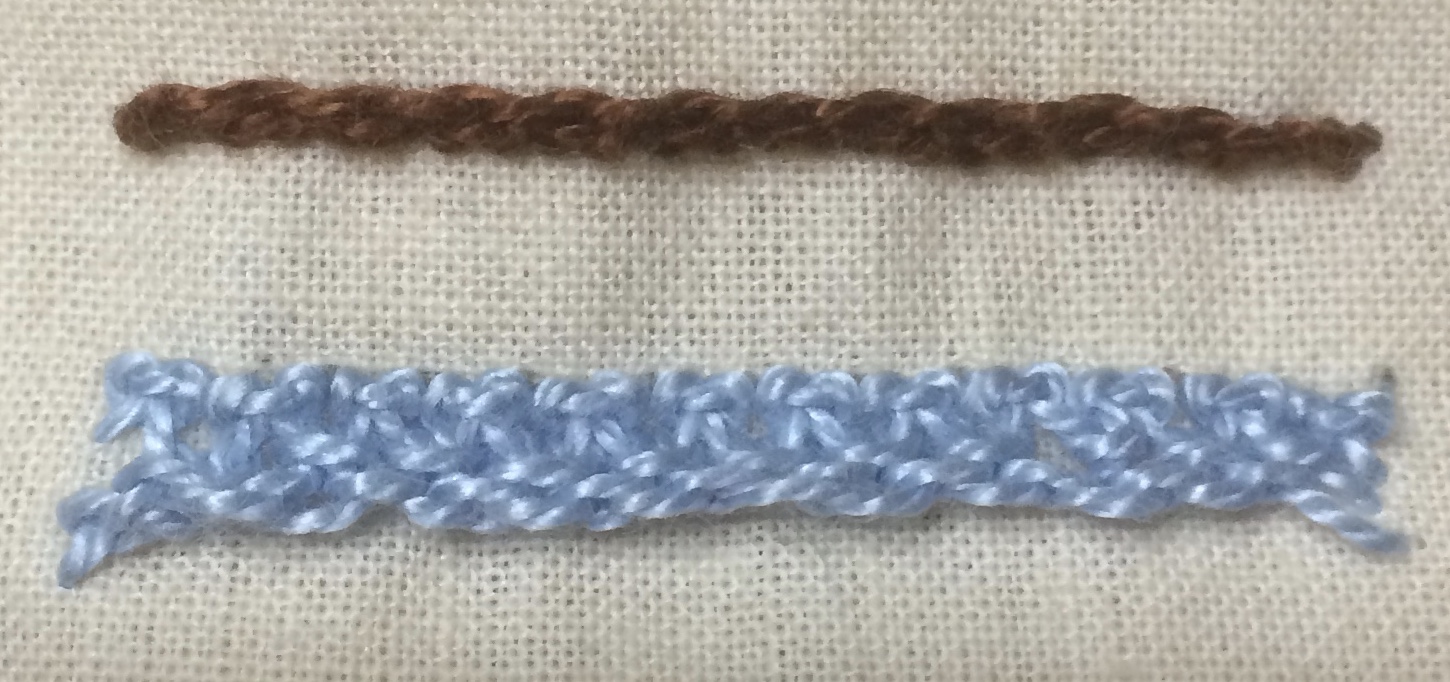
46 Corded Coral Stitch


Easy to do and an interesting linear stitch.


47 Two-sided Insertion Stitch


Such a pretty stitch, and it looks good on the back as well!

48 Detached Up and Down Buttonhole Stitch


Easy and fun. Good for both filling in areas and making a nice braided line.

49 Colonial Knot


This knotted stitch is not that different from French Knots in its look, but I think it sits steadier on the fabric.
The hand movement is very relaxing and you will soon work up speed.


50 Bayeux Stitch


This is a nice filling stitch with long history. It can be used to fill in any design, as Chitra has proved.


Homework:
Make a Sunbonnet Sue sampler, of course. Key expressions are Cold winter and maybe something relating to Korea?
Use your imagination.

Friday, 19 January 2018

Friday Homework for Lesson 49: Colonial Knot

My homework was to add some Colonial Knots to this piece:

which I did. Can you see the white dots?


As Colonial Knot is not a new stitch to me, I have some old items to show.
They are both miniature whole cloth quilts, entered into the Festival of Quilts in Birmingham 2012


and 2013


 The Colonial Knot is absolutely one of my favorites, the movement of the hand soon becomes automatic and is so relaxing. It would take a long time to make a full bedsize quilt of candle wicking, but it would be a labour of love! Maybe one day?!


I also updated my Sunday Stitch School Reference Chart


Sunday, 14 January 2018

Sunday Stitch School - Lesson 49: Colonial Knot

It is time for another History lesson.

Today we are looking at a stitch used by many of the women settlers who travelled West into unknown areas of North America.

The pioneers had with them very limited supplies. Worn clothing was cut apart to make patchwork quilts. It was harder to find thread. Sometimes fabric was painstakingly taken apart and separated into threads. Naturally this 'thread' was not very strong.

However, 'thread' could be found amongst the supplies needed for the annual chore of candle making. The 'wax' used was either tallow, fat from animals collected at slaughter, or sheets of beeswax. The core of the candle, the wick,  is a four stranded thread.

The colonial women found that wick made excellent thread for embroidery and quilting. The four strands could be separated and thereby supply the women with enough thread for various quilting or needlework projects.

Sheets, pillow cases and bedspreads in white cotton were decorated with embroidery in Stem and Outline Stitch, Padded Satin Stitch and French Knots.
A new form of knot was created, as it supposedly requires less thread, the Colonial Knot.
Together these stitches form the embroidery style Candlewicking.

Here are some links to interesting reading about candle making and candlewicking.

Today's stitch is the Colonial Knot, also known as Figure 8 Knot.
French name: point de nœud colonial


Work it like this:

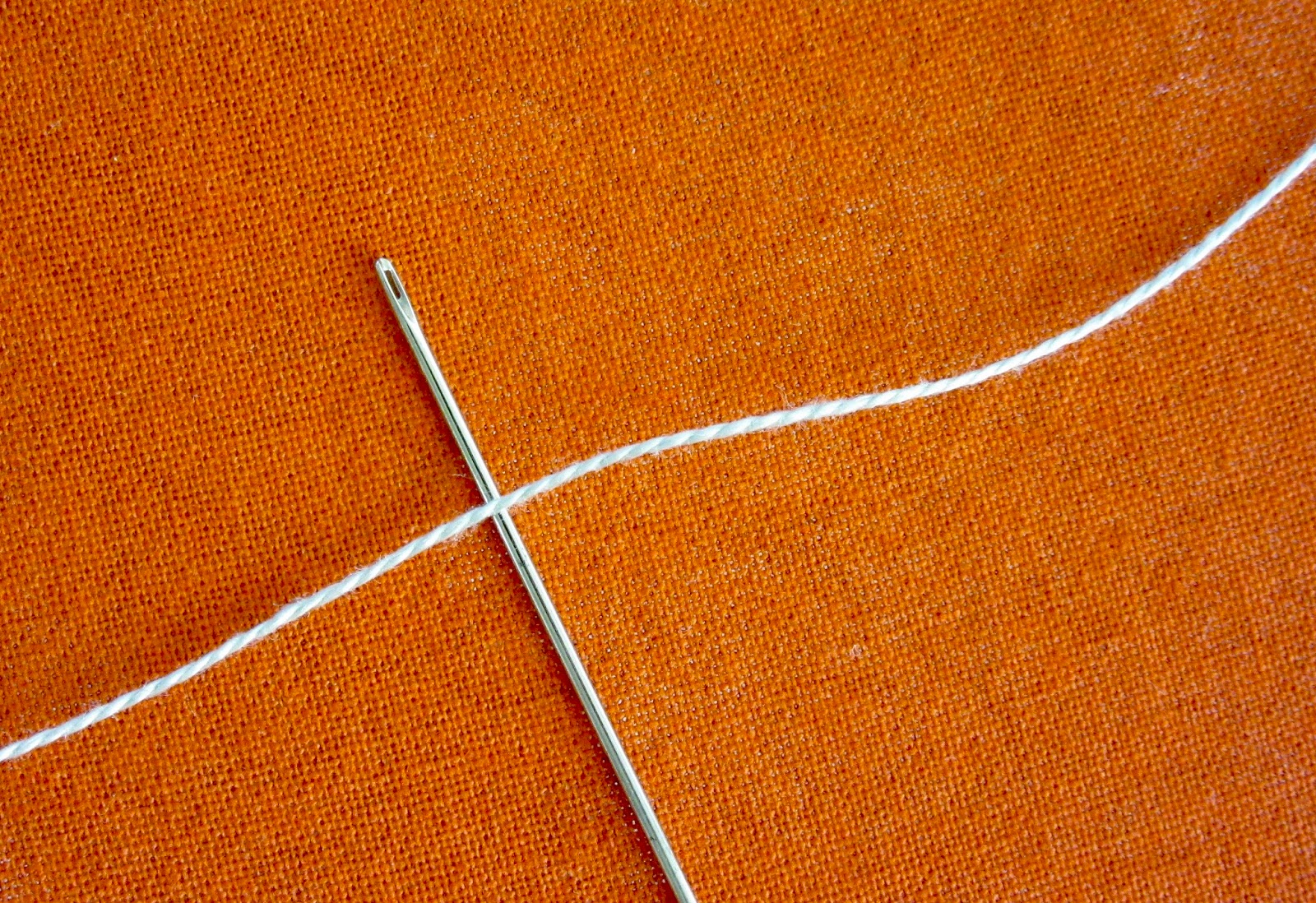
Get out a Milliners needle and a thread with a firm twist, here I used perle #8.


Place the fabric in a hoop.
Tighten the tension.

Place the working thread over the needle like in the picture.


Cross the thread over


and under the needle.


Insert the needle close to where it came out.


Tighten the knot and pull the needle through the fabric


Make dotted patterns with the knots.

Here is a line on my Aida sampler


Homework:
1) Add a sprinkling of Colonial Knots

2) Dig out previous work and show on Friday.